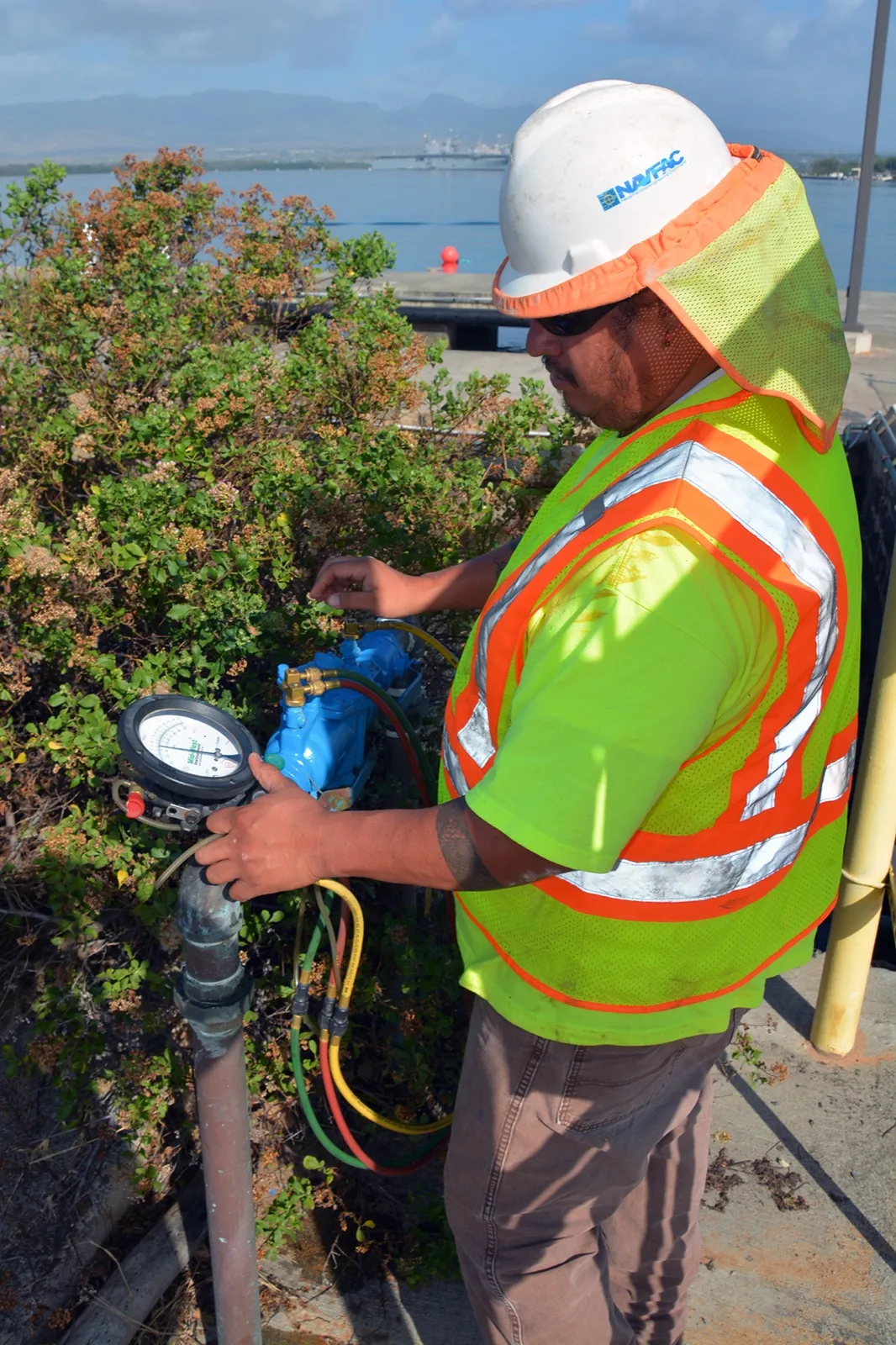
Backflow testing and certification
A backflow test checks that each valve in your assembly still closes and holds pressure the way it should. Most water utilities require it once a year, and after any installation, repair or relocation.
When a test is required
- When a new assembly is installed
- Every year after that (many utilities send a notice with a due date)
- After an assembly is repaired, rebuilt or moved
- When your utility or a property sale requires proof the device works
The exact rules come from your water utility’s cross-connection control program, so they vary from city to city. If you have a letter or notice, include it when you request a test.
What happens during a test
The tester shuts off the water through the assembly for a short time, connects a calibrated differential pressure gauge to the test cocks, and checks each part: that the check valves hold tight, and on an RPZ, that the relief valve opens at the right pressure. On a PVB, the air inlet and check valve are tested. The whole process for one accessible device is usually short.
After the test
If the assembly passes, the result is recorded on the test report your utility requires. If it fails, you’ll get an explanation of what failed and the repair options; once repaired, the assembly is retested.
Certified testers
Every test is performed by a certified backflow tester. Our owner is an AWWA-certified backflow tester. You can upload the notice from your water district when you book online, so we have the device and account details your district asks for.